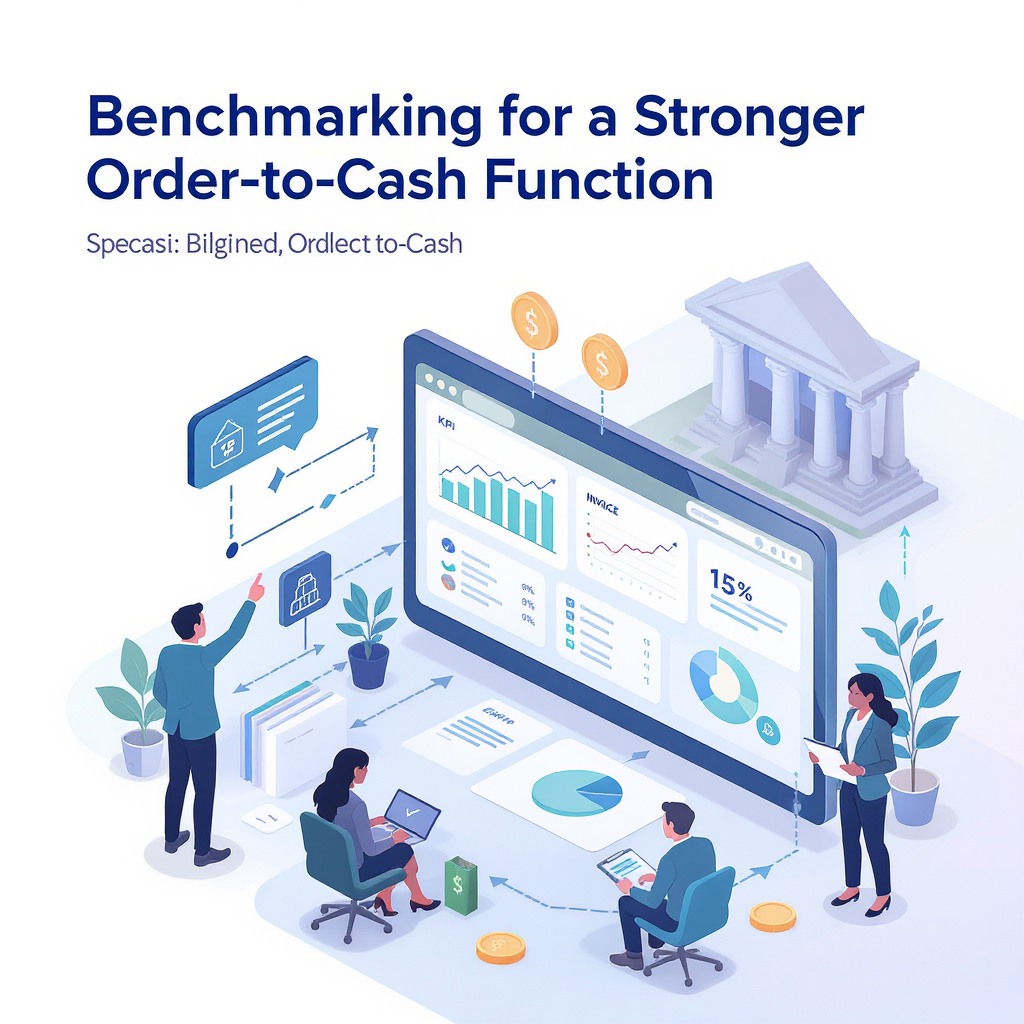

After examining the essential benchmarks in Procure-to-Pay (PTP), it’s time to shift our attention to the Order-to-Cash (O2C) process – a cornerstone of financial operations that directly impacts liquidity, customer satisfaction, and working capital. Effective O2C benchmarking doesn’t just offer numbers; it provides the story behind how well your receivables process is functioning.
Understanding these benchmarks helps identify gaps, improve collections, and streamline the customer payment experience. Let’s walk through the critical metrics that define O2C performance.
Past Due Receivables Over 90 Days
One of the most telling indicators of collection health is the proportion of receivables aged beyond 90 days. When this number is high, it typically signals delays in collections, unresolved customer disputes, or insufficient follow-up. Monitoring this metric allows organizations to assess how much of their cash is locked in aging debts and what proportion of their working capital is at risk.
The Impact of Bad Debt
Despite the best efforts of collections teams, some receivables simply can’t be recovered – whether due to bankruptcy, prolonged disputes, or customers becoming untraceable. This is where the bad debt metric comes in. Calculating written-off amounts as a percentage of total receivables sheds light on how much value is lost and helps evaluate credit policies and collection effectiveness.
Days Sales Outstanding (DSO)
DSO is arguably the most widely recognized O2C metric. It represents the average number of days it takes to collect customer payments. A low DSO typically reflects healthy receivables turnover and efficient cash flow management, while a high DSO can highlight issues like delayed invoicing, poor dispute handling, or weak credit controls. DSO isn’t just a number – it’s a window into how cash moves through your system.
Cost of Collections
Efficiency is about more than just speed. The cost of collections examines how much an organization spends on accounts receivable resources relative to its revenue. This includes salaries, tools, and support functions. A high cost might signal a need for automation or smarter segmentation, while a low cost could point to optimized strategies or high customer compliance.
Understanding Unapplied Cash
One often-overlooked barrier in the O2C cycle is unapplied cash. These are customer payments that are received but not matched to invoices due to missing remittance information, incorrect customer identifiers, or generic payment references. When cash remains unapplied, it delays revenue recognition and invoice closure. By categorizing unapplied cash into aging buckets, organizations can better understand the scope of the issue and work toward cleaner reconciliations.
Unapplied Cash as a Percentage of Total Receivables
In addition to aging analysis, this benchmark compares the total amount of unapplied cash against the overall accounts receivable. This view provides a macro-level understanding of how much of your receivables remain in limbo, impacting not only accounting accuracy but also the overall customer experience.
The Right Path to O2C Excellence
As organizations continue to evolve their finance functions, the ability to measure what matters becomes a competitive differentiator. Each of these O2C benchmarks offers insight into different aspects of performance, efficiency, and risk.
At Right Path Global Services, we help finance leaders and operations teams harness the power of data to create actionable improvements in their O2C processes. Through smart benchmarking, automation insights, and practical execution, we ensure that finance transformation stays aligned with business goals – while making room for greater transparency, speed, and accuracy.